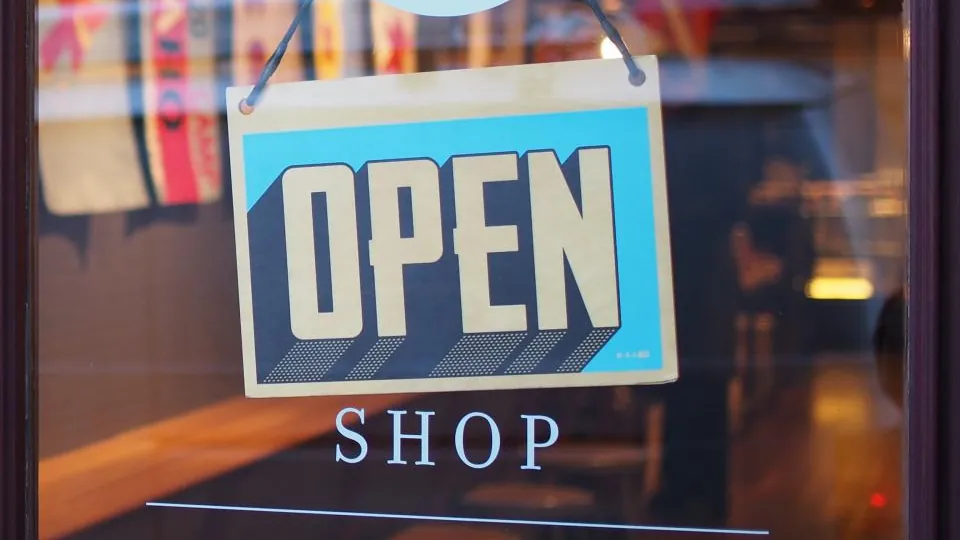
You've got a Facebook page with decent reviews. You're on Google Maps. Word of mouth keeps you busy. So someone asks: do you have a website? And you think - do I actually need one?
It's a fair question, and the honest answer is: it depends. But for most small UK businesses, the answer is yes - and the reason is more practical than you might expect.
What social media can't do that a website can
Facebook and Instagram are great for staying in front of people who already know you. But they weren't built for new customers who are searching for what you offer right now.
When someone types "plumber in Sheffield" or "hair salon near me" into Google, what appears in the results? Websites. Google doesn't surface Facebook pages as search results in the same way. If you don't have a website, you're essentially invisible to anyone searching for your service in your area - which is exactly the moment they're ready to spend money.
Social media also has another problem: you don't own it. Facebook can change its algorithm overnight. Your account can be suspended. The platform can shut down. A website is yours - and it stays there regardless of what any tech company decides to do.
Something worth knowing: Google Business Profile (the map listing) is excellent for local searches, but it works best when it links to a website. Businesses with websites consistently rank higher in local results than those without.
The trust factor
Think about the last time you were considering a tradesperson, a therapist, a venue, or any local service you hadn't used before. Did you look them up online? Most people do - and if they find nothing beyond a Facebook page, doubt creeps in.
A professional website signals that you're established. It gives potential customers somewhere to read about your services properly, understand your prices (or at least your approach), and decide whether you're the right fit - before they pick up the phone. That removes friction and makes it much more likely they'll contact you.
Without a website, you're asking people to make a decision based on very little. Many of them won't bother - they'll just move on to someone who does have one.
When does a business actually need a website?
You rely on local customers finding you
If new customers need to discover you - rather than being referred - you need to be findable online. That means a website. Whether you're a cleaner, a driving instructor, a florist, or a physiotherapist, the people who need you are searching for you on Google right now.
You sell services, not just products
If you're selling a service, customers need to understand what you do, how you do it, and why they should choose you over someone else. A website gives you the space to explain this clearly. A social media bio doesn't.
You want to be taken seriously by other businesses
If any part of your business involves B2B work - suppliers, commercial clients, partnerships - not having a website raises questions. It's the digital equivalent of not having a business card.
You want to stop relying entirely on word of mouth
Word of mouth is valuable, but it's unpredictable. A website lets you generate a steady flow of enquiries from people actively searching for what you offer - independent of who happened to mention you to whom.
Get online without the hassle
We build and manage your website for £39.99 a month. No setup fee, no contract, and we write all the content for you.
See what’s included →Are there cases where you don’t need one?
To be fair: yes, there are situations where a website is less critical.
- You're at full capacity and actively turning work away
- 100% of your business comes through referrals and you have more than you need
- You're winding down or testing whether a business idea is viable before investing in it
Even in those cases, a basic website costs very little relative to the security it provides. If your referral network dried up tomorrow, you'd want something in place quickly.
What does a website for a small business actually need?
It doesn't need to be complicated. Most small business websites work best when they're focused and clear. The essentials:
- What you do - described clearly and in plain English
- Where you operate - so Google knows to show you in local searches
- Why customers should choose you - a few words about your experience, approach, or what makes you different
- How to get in touch - a phone number, email, and contact form
- Social proof - reviews or testimonials if you have them
That's genuinely all most local businesses need. Five pages at most. The goal isn't to impress people with elaborate design - it's to give them enough information to feel confident picking up the phone.
The bottom line
In 2026, not having a website isn't a neutral position - it actively works against you. You're invisible to everyone searching online, and you lose credibility with the people who do find you some other way and then look you up.
The question isn't really whether you need one. It's how to get one without spending thousands or wasting weeks of your own time on it. That's exactly the problem we built GetOnWeb to solve.